
2026-02-04
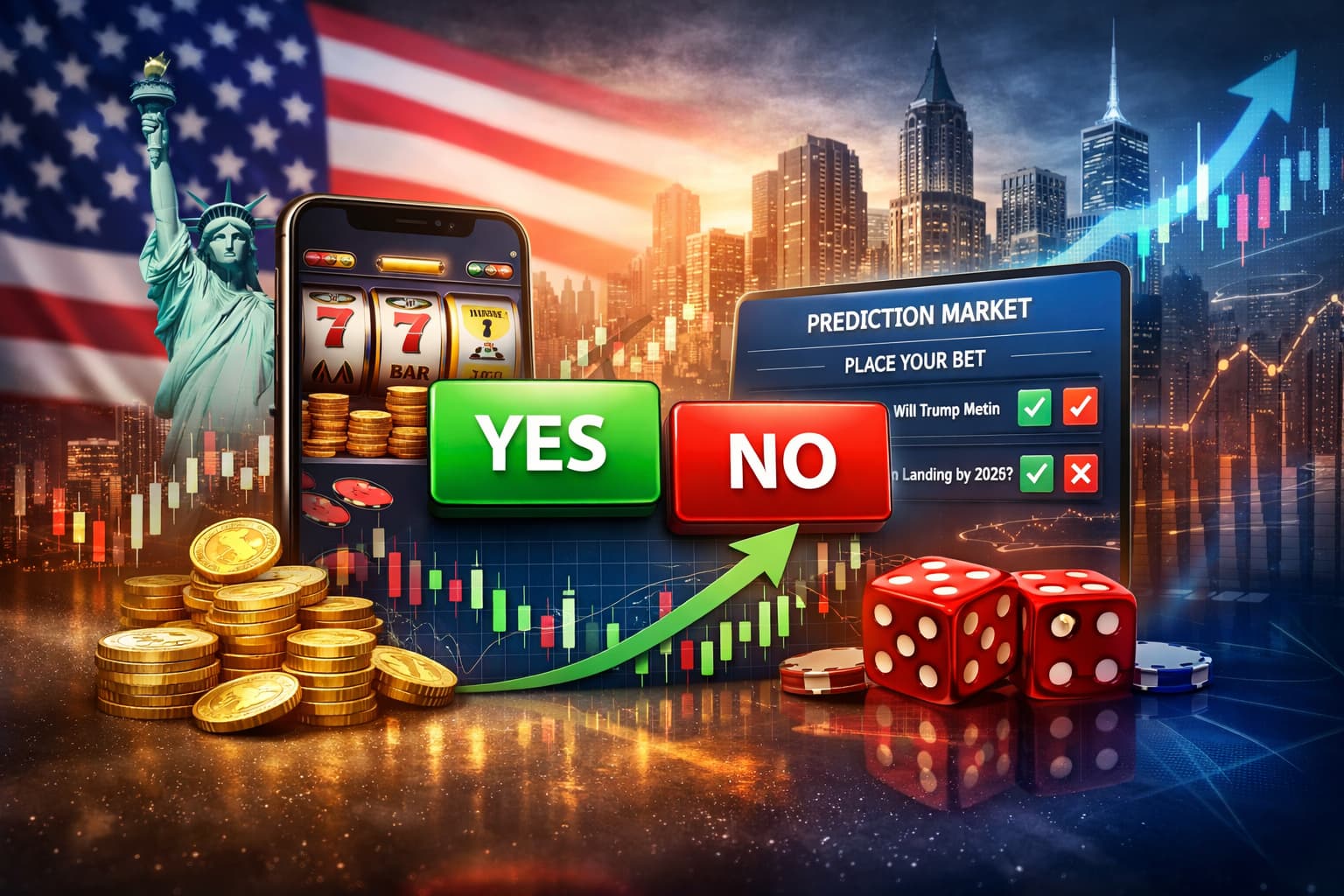
Post-COVID, US online gambling has taken on a life of its own.
It was always a booming industry, but the past half-decade has seen the American online gambling market reach a value of $6.89 billion, while the number of global casinos and online gambling businesses in the country grew 2.2% per year (on average) between 2019 and 2024.
A fascinating NerdWallet survey also recently found that 62% of Americans have gambled in the past 12 months. Of those, around 24% of Gen Z gamblers and 22% of Millennials say that they don’t do it for fun, but treat it as an investment.
Before the recent gambling explosion seen in the US, particularly among Millennials and Gen Z, the main ways to gamble online were through online casinos, sportsbooks, and virtual poker rooms.
These three options are still hugely popular today, but there have been some new auditions to American iGaming over recent times that have helped take the industry to a different level and introduce the concept of gambling to new generations.
The newest additions to the US gambling introduction have been sweepstakes casinos and prediction markets, both of which are completely transforming how (and where) people gamble.
A new type of online casino, the ‘sweepstakes casino’, has completely taken over US gambling.
What makes sweepstakes casinos unique is that they’re not casinos in the traditional sense. Sure, they look similar and all of the games are the same, but the twist is that you play with virtual coins instead of real money.
If you use Gold Coins, you essentially get to play for free, while using Sweeps Coins allows you to potentially win prizes.
This freemium, prize-winning approach has got young players hooked and created a $8.36 billion sweepstakes casino market, with sites like Chumba Casino and WOW Vegas raking in plenty of players.
Sweepstakes casinos have also proven to be a major hit on streaming platforms like Kick and Twitch, while pop culture figures such as Drake and Adin Ross have plugged the Stake sweepstakes casino and skyrocketed right to the top of the gambling charts.
The rise of sweepstakes casinos is something that Alex Windsor from SweepsKings has recently spoken about:
“Sweepstakes casinos have effectively changed how the new generation gambles. Now, the casino experience is all about playing for fun and potentially winning prizes on top of that. You’ve also got features like free-entry tournaments, exciting leaderboards, and daily prize drops for players to enjoy, so it’s not surprising that sweepstakes casinos have become so popular and will likely remain so for years to come.”
Following the recent rise of sweepstakes casinos, which don’t have to follow traditional gambling laws and regulations due to using virtual coins instead of real money, a growing number of US states have looked at these sites and decided to pass anti-sweepstakes casino bills.
Already, California, New York, Connecticut, Nevada, Louisiana, Michigan, and several other states have successfully banned sweepstakes casinos, with more looking to join the party (Tennessee is the latest state to make a move against sweepstakes casinos, although a bill has yet to be officially passed into law).
Just as American gambling culture was shifting permanently in the way of sweepstakes, these recent bans have somewhat stunted the growth of the sweepstakes market, with a slight decrease in revenue now projected for 2026.
It’s far from the end of the road for sweepstakes casinos, as the likes of LuckyLand Slots and McLuck are still going to keep pulling in millions of players, but it certainly shows that these sites will have to change and adapt over the coming months in order to keep their newfound grip over the US iGaming market.
Outside of sweepstakes casinos, prediction market sites have experienced a huge surge in the US.
There’s a lot of debate currently as to whether prediction markets are gambling sites, yet there’s no denying they are essentially a simplified version of the classic American pastime.
When players sign up with prediction market sites like Kalshi and Polymarket, there are hundreds of simple ‘YES/NO’ markets for them to pick from.
These range from almost anything, from the serious to the somewhat outrageous.
You can bet on ‘Will Trump talk to Vladimir Putin in January?’ ‘Human moon landing in 2026?’, and even ‘Will Jesus Christ return before 2027?’, and those are just a few of Polymarket’s current popular options.
These sites are all decentralized and allow American gamblers to essentially bet on these outcomes in the form of ‘contracts’, similar to that of predicting the performance of a particular stock market.
As a result, just like sweepstakes casinos, prediction markets are able to escape traditional gambling laws and reach huge audiences, helping to transform the way Americans gamble.
Polymarket’s monthly active ‘traders’ just climbed to an all-time high of 477,850 back in October last year, while Kalshi has just hit an incredible $11 billion evaluation after a hugely successful 2025 with Americans, so these types of sites show no sign of slowing down.
It’s safe to say that US gambling is now unrecognizable compared to five years ago.
Pre-COVID, it was all about online casinos and sportsbooks, and still is in lots of ways (you only have to look at the recent Super Bowl betting numbers to understand that).
However, with Gen Z and Millennials starting to dominate US gambling, it’s now more heavily focused on sweepstakes models and popular prediction markets.
Simply put, many modern-day gamblers would much rather play for free inside sweepstakes casinos or bet on highly entertaining prediction markets that require nothing more of them than simply tapping on ‘YES’ this will happen or ‘NO’ it will not.
What the future holds for US gambling ultimately remains to be seen, but what we do know is that traditional casinos and sportsbooks are going to have to fight to stop their players being stolen away by the newly emerging sweepstakes casinos and prediction market sites, which have all the momentum in the world now behind them, despite recent legal controversies.